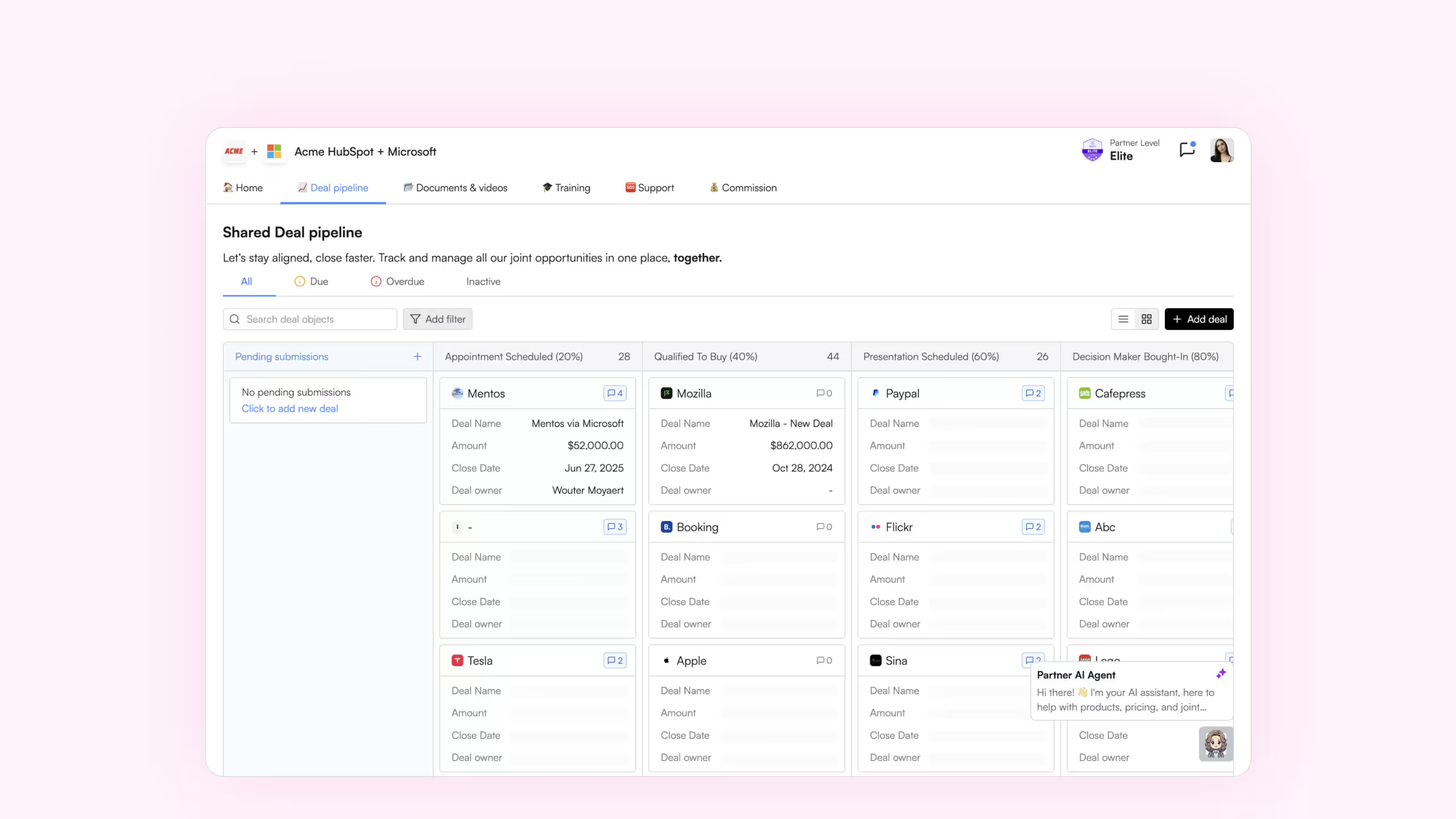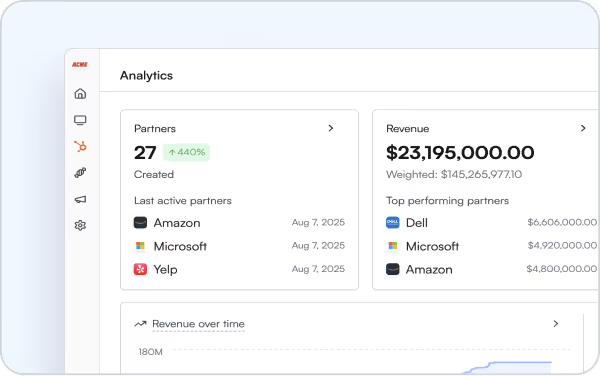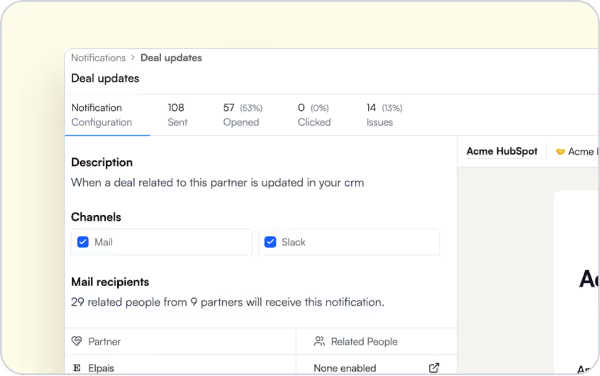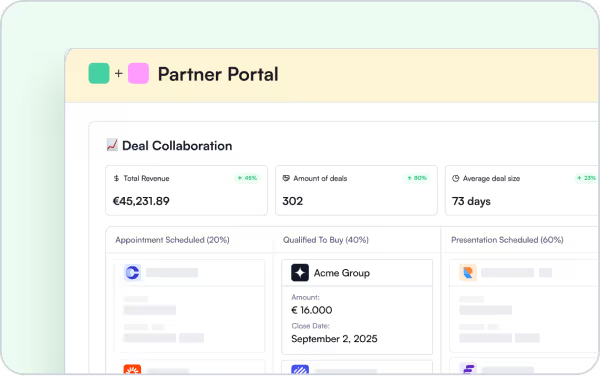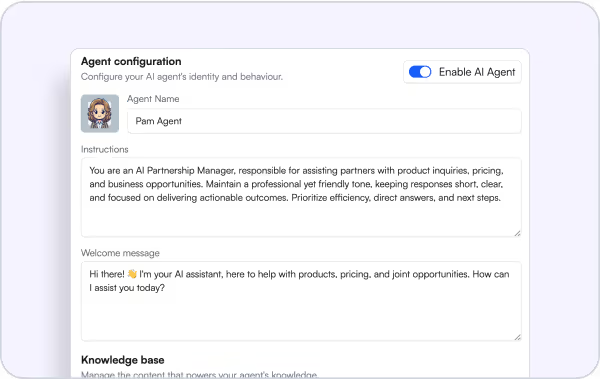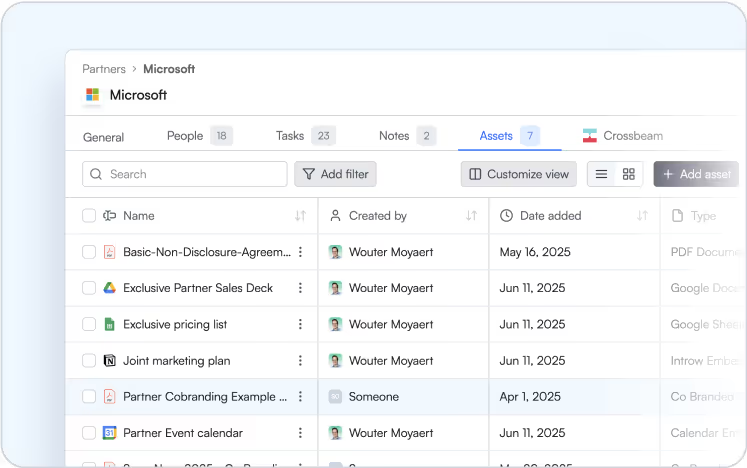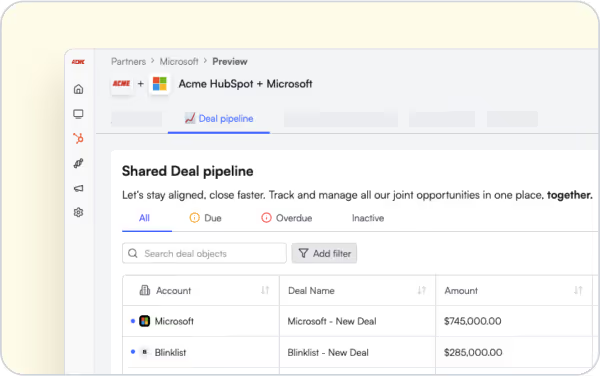
Forget about manually updating partners about deals, product updates and more. Drive engagement on autopilot
Announcements
Push updates in shared Slack channels
Automatic mails
Deal Collaboration
Deal Collaboration on Autopilot
You don’t want to invite partners into your CRM. Allow resellers to manage their own deals, and send automated deal updates to referral partners. Keep your partners in the loop without the manual work.
100+ Integrations
Add content to your partner portal and leverage your existing tools
Seamlessly integrate videos, documents, next steps, and real-time CRM components. Empower partners with the right information at the right time, using your existing tools.
The Ghent-based technology startup Introw, which is already helping 100+ B2B companies to boost sales through partners, has raised $3 million in a new funding round led by Visionaries Club and with the continued support from PitchDrive. Since its launch in 2023, Introw’s AI-powered partner platform has facilitated tens of thousands of partner interactions and helped clients generate millions in additional pipeline.
The company had previously raised €1 million from Pitchdrive and angel investors including Pieterjan Bouten (Ex-Showpad) and Ewout Meyns (Ex-HubSpot).
From Local Studio to International Growth
Founders Andreas Geamanu (CEO), Laurens Lavaert (CTO), and Simon Van Den Hende (Head of AI) started Introw in early 2023, originally incubated by StarApps, the venture studio of serial entrepreneurs Lorenz Bogaert & Nicolas Van Eenaeme, also known as the “Netlog mafia.”
2025 has been a breakthrough year for Introw: the team grew from 4 to 15 people, and revenue quadrupled.
AI-Driven Partner Enablement
Buyers now expect highly personalized experiences, yet outreach fatigue and tighter privacy regulations have made it harder for direct sales teams to cut through the noise. That’s why an increasing number of companies are turning to partner sales (indirect sales) as these already have relationships, credibility, and access to customers.
Introw’s AI-powered partner portal enables companies to onboard, train, and activate partners in minutes. Unlike legacy systems that take months to deploy, Introw connects instantly to your CRM, giving partners access to customer data, and sales tools to close more deals.
“Each day a partner lacks the right information, means lost revenue. Where other partner portals take four to six months to launch, we do it in minutes.” says CEO Andreas Geamanu.
Visionaries Club Backs a Fast-Growing Success Story
Visionaries Club, which previously invested in tech companies such as Lovable, n8n, and the Belgian Accountable (recently acquired by Visma), sees huge potential in Introw.
Partnerships drive a huge share of global B2B revenue, yet most teams still manage them with spreadsheets and outdated tools. Introw is changing that with a platform built for speed and simplicity.” said Robert Jäckle, Partner at Visionaries Club. “The team is creating the first truly intelligent partner system, turning partnerships from a ‘nice-to-have’ into a real growth engine. We’re backing them because they move fast and have the ambition to own this category
Becoming the Market Leader in Partner Enablement
A large share of Introw’s revenue already comes from the US, where the company is seeing accelerating traction. With this new funding, Introw is scaling its sales and marketing presence and doubling down on its AI-first vision.
The mission is clear: To become the global leader in AI-driven partner enablement and redefine how companies grow through partners.
About Introw
Founded in 2023 and based in Ghent, Introw is redefining how companies sell through partners. The platform empowers B2B organizations to onboard, train, and enable their partners globally through an AI-powered partner portal.
By deeply integrating with a company’s CRM, Introw enables seamless collaboration between internal sales teams and external partners, ensuring everyone has access to the right data, context, and tools to close deals faster.
Already used by 100+ companies across more than 30 countries such as Factorial, Parloa & Coder, Introw helps organizations transform partnerships into a scalable revenue engine.
About Visionaries Club
Visionaries Club is a leading European early-stage VC with offices in London and Berlin, focusing on B2B with its flagship seed and early-growth funds, alongside its industrial deeptech fund, Visionaries Tomorrow. Visionaries unites the strongest network of successful tech founders together with the family entrepreneurs behind global industrial businesses in a single LP community to supercharge the next generation of category-defining software and AI giants. It counts Personio, Lovable, Miro, Pigment, Accountable, n8n, Tacto, Apron, Choco and Xentral among its portfolio companies.
(Fun)ding video
We love building and hustling, but we also love to have some fun. Enjoy the video (powered by Hooked Visuals) 😜.
There are four ways to manage B2B partners in Salesforce—picklist, lookup field, relation table, or custom object. Each suits different levels of complexity. Start simple or go advanced depending on how many partners you work with and how detailed your attribution needs to be.
When working with B2B partners, it's important to have a clear way of tracking who’s involved in your opportunities and how they contribute to revenue. In Salesforce, there’s no one-size-fits-all method — and that’s the beauty of it. Depending on your organization’s needs, technical maturity, and the complexity of your partner ecosystem, you can choose from several flexible approaches.
Below, we break down 4 common ways to manage partners in Salesforce and attribute revenue to them effectively.
1. Picklist field on an Opportunity
Best for: Simpler programs with one partner per Opportunity
The most straightforward method is to add a picklist field to the Opportunity object — for example, a field called Partner Name or Partner Source. You pre-define a list of your partners and let your sales team select the right one during opportunity creation.
How does it work?
What are the pros?
✅ Easy to implement
✅ No complex relationships needed
✅ Good for easy single-partner attribution
What are the cons?
❌ Not ideal for scaling or multi-touch attribution
2. Lookup field to an Account object Recommended
Best for: One-to-one attribution with better data control
A step up from a picklist is using a lookup relationship field that connects an Opportunity to an Account object. This allows you to reference a full account record (your partner) and pull in relevant details automatically.
How does it work?
What are the pros?
✅ Clean reference to partner data being stored in your accounts
✅ Can support reporting and automation more effectively
✅ Easy to update if the Account record changes
What are the cons?
❌ Limited to one partner account per opportunity
3. Via a Relation table
Best for: Multi-partner attribution or shared deals
If you need to support multiple partners per opportunity, you’ll want to use a relation table that sits between Opportunities and Partner Accounts. This creates a many-to-many relationship, enabling flexible collaboration and advanced revenue sharing logic.
How does it work?
What are the pros?
✅ Ideal for ecosystems with resellers, distributors, and co-marketing partners
✅ Enables advanced logic for revenue splits or co-selling
✅ Ideal for ecosystems with resellers, distributors, and co-marketing partners
What are the cons?
❌ Requires a more technical setup and configuration
❌ More complex for reporting unless standardized
4. Custom Object for Partners
Best for: Large-scale partner programs with tiering, statuses, and multiple partner touchpoints
For organizations that want to treat their partners as a core part of the Salesforce data model, creating a dedicated Partner object is the most robust option. You can relate this object to Opportunities, Contacts, Accounts, and more — and track custom partner attributes like tier, region, industry focus, etc.
How does it work?
What are the pros?
✅ Fully flexible and scalable
✅ Allows for richer partner data and automation
✅ Better suited for partner performance analytics and program insights
What are the cons?
❌ Requires upfront planning and schema design
❌ Needs buy-in from operations and potentially dev teams
Conclusion
Choosing the right method to manage and attribute your B2B partners in Salesforce depends on the complexity of your partnerships and the level of reporting or automation you need. While simple picklists work for early-stage programs, relation tables or custom objects are better suited for mature ecosystems.
At Introw, we help customers integrate their partner workflows directly into Salesforce — making it easy to attribute, collaborate, and scale with partners, no matter which method you use.
A PRM (Partner Relationship Management) is software that helps companies manage their relationships with B2B partners (such as referral partners, resellers, distributors ISVs & integration partners). A PRM streamlines tasks like onboarding, sales tracking, communication, performance monitoring, and sales enablement. It aims to improve collaboration and efficiency in partner relationships.
How are we different from a traditional PRM?
Introw uses your CRM as the single source of truth, allowing you to set-up a partner portal in minutes, not months. Next to that we're creating the most frictionless experience with off-portal collaboration functionalities.
Does my sales team need to login to introw.io?
No, your sales team can sit back and relax in their CRM.
Launch your partner portal in minutes!
Thank you! Your submission has been received!
Oops! Something went wrong while submitting the form.